|
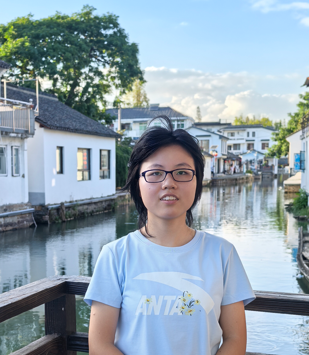
Yuanbin Wang I am an undergraduate student majoring in Electronic Science and Technology at Shanghai Jiao Tong University.I am currently working with Prof. Li Wei at the National University of Singapore. My current research interest is AI for Electronic Design Automation (EDA), especially AI agents that can interact with EDA tools for circuit design, simulation, verification, and design-space optimization. With a background in digital and analog electronics, embedded systems, machine learning, and industrial AI, I am interested in the intersection of intelligent agents and hardware design. |
|
ResearchI am interested in AI for electronic design automation, hardware-aware foundation models, tool-using agents, circuit design and verification, design-space exploration, and machine learning for electronic manufacturing. My current focus is to explore how AI agents can understand design specifications, use EDA tools, analyze simulation feedback, and iteratively improve hardware designs. |
|
Vectorized Video Representation with Easy Editing via Hierarchical Spatio-Temporally Consistent Proxy Embedding
Ye Chen, Liming Tan, Yupeng Zhu, Yuanbin Wang, Bingbing Ni arXiv preprint, 2025 paper We propose a hierarchical video representation based on spatio-temporally consistent proxy nodes, enabling robust modeling of dynamic scenes and controllable video editing under motion, occlusion, and viewpoint changes. |
|
Variational Perturbation Personalized Federated Learning via Prior-Posterior Distance
Hefeng Zhou, Yuanbin Wang, Jun Wang, Jiong Lou, Wugedele Bao, Chentao Wu Jie Li ICASSP 2025 paper / code We propose a variational perturbation method for personalized federated learning under statistical heterogeneity. The method compares prior and posterior data distributions to improve the robustness of model updates. |
|
GFLAgent: Green Federated Learning Agent for Asynchronous Client Selection
Hefeng Zhou, Yuanbin Wang, Dingxuan Zhang, Jiong Lou, Hongze Liu, Jucheng Yang, Wugedele Bao, Jie Li ICIC 2026 paper We propose an LLM-agent-driven scheduling system for asynchronous federated learning. GFLAgent performs client selection and tier assignment using real-time and historical signals to improve time-to-accuracy and training efficiency. |
|
Last updated: 2026 |